Jordan Hansen · 2 September 2026
Emerging artist Elena Voss has introduced a new series of etchings that emphasize acid-free methods, drawing attention to sustainable practices in the field of printmaking. Her work focuses on reviving techniques that were common before the widespread use of nitric acid in the 19th century. By using copper sulfate and other less toxic substances, Voss achieves similar results with reduced health risks and environmental damage.
Traditional Methods Reimagined
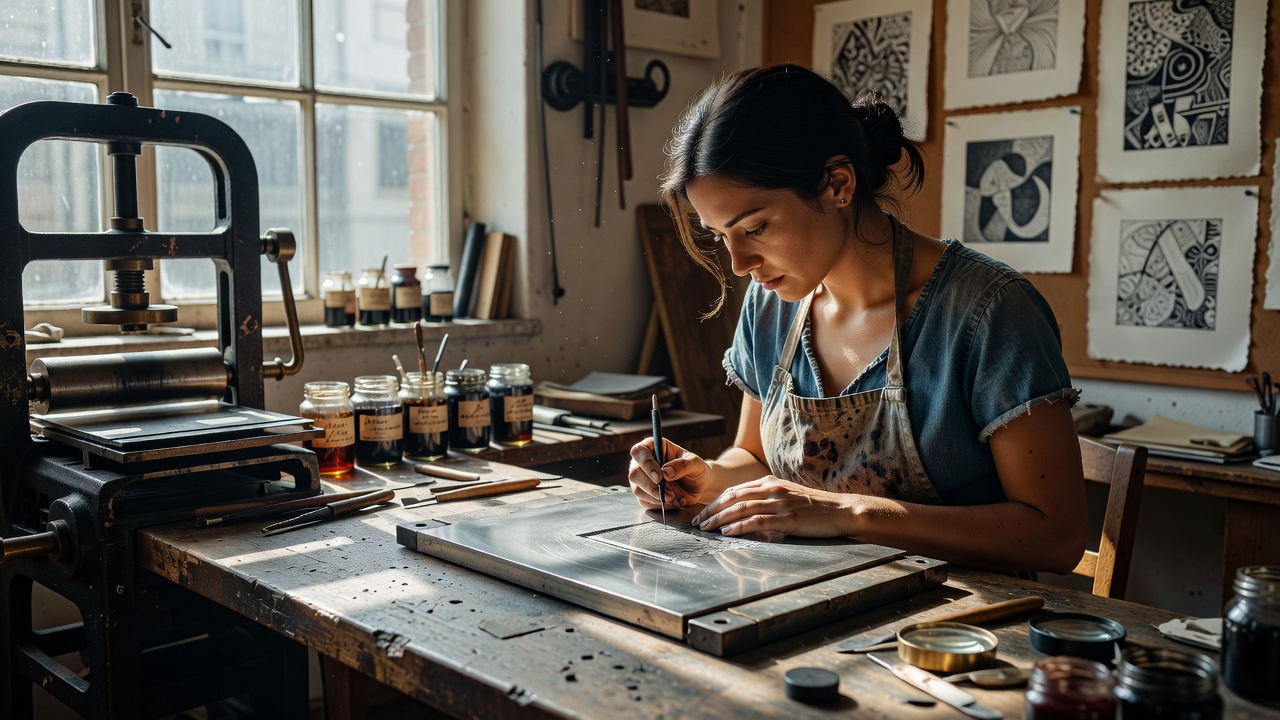
Voss developed her techniques after studying historical etching processes that avoid harsh chemicals. Her approach uses alternative mordants and plates that reduce environmental impact while maintaining artistic quality. In her latest works, she explores themes of nature and preservation through intricate line work and subtle tonal variations. The process involves coating the plate with a ground, drawing the image, and then immersing it in a solution that etches the exposed areas without the fumes and dangers of acid. This method requires patience and precision, as the etching time is longer but the control is greater. Artists like Voss are finding that these methods allow for finer details and a wider range of textures. The series, titled Echoes of the Earth, features ten pieces created over the past year. Each etching demonstrates careful attention to detail, with lines that capture the essence of organic forms. Critics have noted the clarity and depth achieved without traditional acids. The artworks depict forests, rivers, and wildlife, symbolizing the need for conservation. Viewers have praised the delicate shading and the way light plays across the surfaces. Voss explains that her motivation stems from concerns about the toxicity associated with conventional etching. By reviving older, less harmful methods and adapting them with modern materials, she aims to make the craft more accessible and safer for practitioners. She has documented her process in a series of videos that are available online for educational purposes.
Broader Implications for the Art Community
The adoption of acid-free techniques could influence how etching is taught in art schools and practiced in studios worldwide. Workshops led by Voss have already attracted participants interested in eco-friendly alternatives. Her work highlights the balance between innovation and respect for historical craftsmanship. Many established printmakers are beginning to experiment with these methods after seeing her results. Industry observers suggest that such methods may lead to new standards in printmaking. The reduced use of hazardous substances aligns with growing awareness of environmental issues in the arts. Voss plans to exhibit the series at several galleries, hoping to inspire other artists to explore similar paths. The series has been acquired by a museum for its permanent collection, underscoring its significance. Through her dedication, Elena Voss is contributing to a shift toward more responsible artistic practices. Her series serves as an example of how traditional techniques can be updated to meet contemporary needs without compromising on aesthetic value or technical precision. Future projects may include collaborations with scientists to further refine the materials used in acid-free etching.